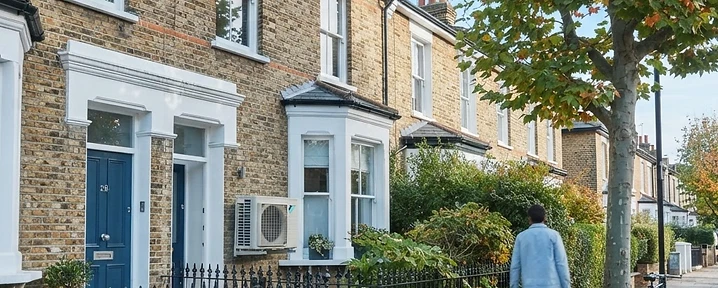
Early Autumn Warmth in London: Why Dual Split Systems Keep Homes Balanced
Forecast daytime highs climbing into the low 70s Fahrenheit highlight the shifting nature of British early autumn weather.
Recent weather tracking across the UK illustrates the unpredictable nature of late-summer and early-autumn transitions. Following unsettled conditions and rain showers across London and the south of England, temperatures are projected to climb into the low to mid-70s Fahrenheit (around 22 to 24 degrees Celsius) over the coming days, accompanied by prolonged sunny spells. These fluctuating shoulder-season patterns create a unique indoor climate dilemma for households across the country.
Modern UK residential properties are structurally optimised to trap ambient warmth, incorporating cavity insulation, double glazing, and airtight building materials. While this design is invaluable in the depths of winter, it frequently causes upper floors and south-facing rooms to overheat when bright sunshine breaks through moderate seasonal weather. Relying on opening windows often introduces street noise and humidity, whereas traditional heating controls are unsuited to managing sharp diurnal temperature shifts.
This dynamic underlines the increasing utility of dual-function split air conditioning systems. Operating as reverse-cycle heat pumps, modern air conditioners can seamlessly shift between gentle convective cooling during sunny afternoons and targeted low-energy heating when night-time temperatures drop into the low 50s Fahrenheit.
Compared with traditional central heating systems that must warm entire water circuits and radiational pipework, ductless split units condition individual rooms rapidly on demand. As changeable autumn patterns become standard across the UK, installing responsive climate systems ensures that homeowners maintain consistent comfort without wasting unnecessary electricity or gas.