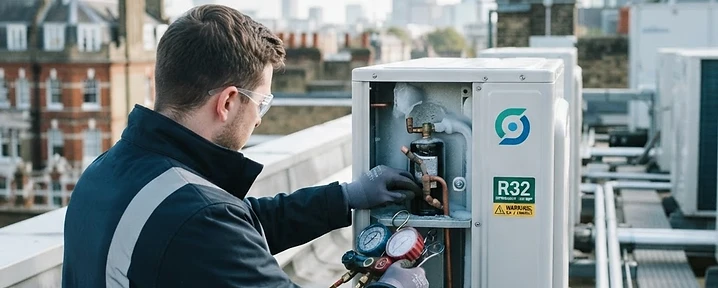
The 2026 HVAC Shift: Preparing for New Refrigerant Regulations
As the industry moves toward lower-GWP refrigerants, we explain what these changes mean for your next air conditioning installation.
The HVAC industry is currently undergoing a significant transformation driven by stricter F-gas regulations and a global push to reduce the environmental impact of cooling systems. For UK homeowners and businesses, this means that the technology inside your air conditioning unit is evolving rapidly. Manufacturers are increasingly moving away from traditional refrigerants in favour of low-Global Warming Potential (GWP) alternatives. These new refrigerants are designed to be more environmentally friendly while maintaining, or even improving, the cooling efficiency of the units. Understanding these changes is essential for anyone considering a new installation. When you purchase a modern air conditioning system today, you are likely investing in a unit that complies with these latest environmental standards, ensuring your system remains future-proofed against upcoming regulatory phase-downs. These advancements are part of a broader industry commitment to sustainability, ensuring that as the demand for cooling grows, the environmental footprint of the sector decreases. It is important to work with certified installers who are up-to-date with these refrigerant changes, as they can provide guidance on the most efficient and compliant systems for your specific needs. By choosing a system that utilises the latest refrigerant technology, you are not only contributing to a greener future but also ensuring that your equipment remains serviceable and efficient for years to come. As the industry continues to innovate, the focus remains on balancing high-performance cooling with responsible environmental stewardship. Whether you are upgrading a home or a commercial space, staying informed about these technical shifts will help you make a smarter, more sustainable investment in your climate control infrastructure.
More in Industry
 Industry
Non-Domestic EPC B Standards: What Businesses Need to Know for 2026
New government updates on Minimum Energy Efficiency Standards (MEES) are set to impact the non-domestic private rented sector, pushing for higher EPC ratings.
 Industry
Non-Domestic Energy Standards: What the EPC B Requirement Means for Business
The UK government is moving forward with plans to raise minimum energy efficiency standards for non-domestic buildings to EPC B.