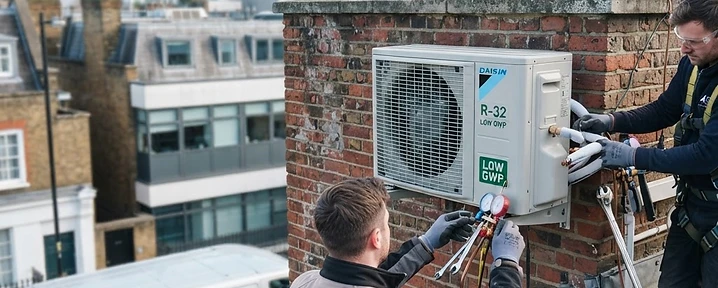
The 2027 HVAC Shift: Why Low-Carbon Refrigerants Matter
As F-gas regulations tighten, the UK HVAC industry is shifting toward low-GWP refrigerants, ensuring your next air conditioning purchase is future-proof.
The HVAC industry is currently undergoing a significant transformation driven by evolving F-gas regulations. As the UK continues to align its environmental standards with global efforts to reduce greenhouse gas emissions, the refrigerants used in air conditioning and heat pump systems are being phased out in favour of more sustainable, low-Global Warming Potential (GWP) alternatives. For the average homeowner, this shift is a positive development that ensures the systems being installed today are future-proofed against upcoming regulatory changes. Modern air conditioning units are now being designed with these new, environmentally friendly refrigerants, which offer the same high performance and efficiency as their predecessors but with a much smaller environmental footprint. When purchasing a new system, it is important to ensure that the unit you choose complies with the latest standards. This not only guarantees that your system will remain compliant for years to come but also often means you are getting the latest in compressor and heat exchange technology. These advancements contribute to quieter operation, better energy efficiency, and more precise temperature control. The transition to these new refrigerants is part of a broader industry commitment to sustainability, reflecting the growing demand from consumers for products that align with their environmental values. As we move toward 2027, the availability of these high-efficiency, low-carbon systems will continue to increase, making it easier than ever to find a solution that meets your cooling needs while supporting the UK's net-zero ambitions. If you are considering an upgrade, speak with your installer about the refrigerant type used in the units they recommend. Choosing a system that uses modern, low-GWP refrigerants is a smart, long-term investment that protects both your home comfort and the environment. By staying ahead of these regulatory shifts, you can enjoy the benefits of cutting-edge climate control technology while knowing your home is prepared for the future of sustainable living.
More in Industry
 Industry
Non-Domestic EPC B Standards: What Businesses Need to Know for 2026
New government updates on Minimum Energy Efficiency Standards (MEES) are set to impact the non-domestic private rented sector, pushing for higher EPC ratings.
 Industry
Non-Domestic Energy Standards: What the EPC B Requirement Means for Business
The UK government is moving forward with plans to raise minimum energy efficiency standards for non-domestic buildings to EPC B.